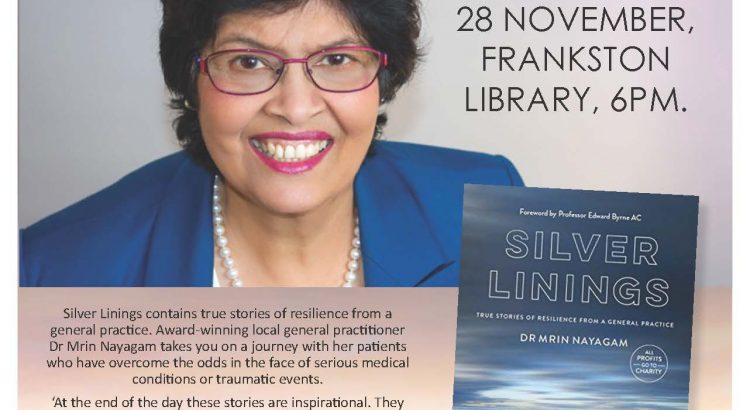
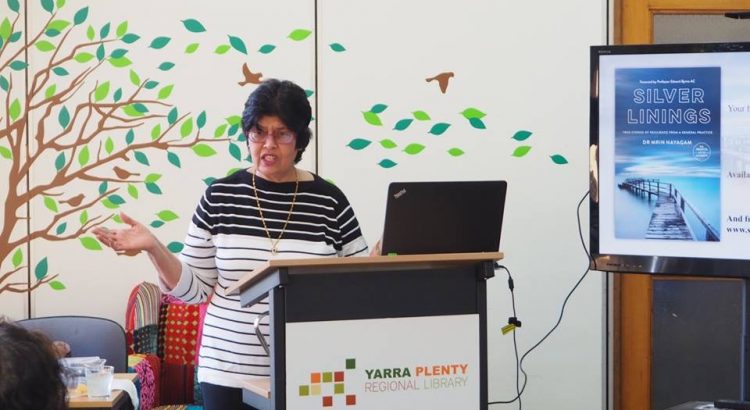
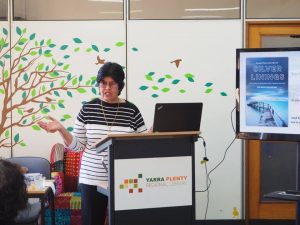
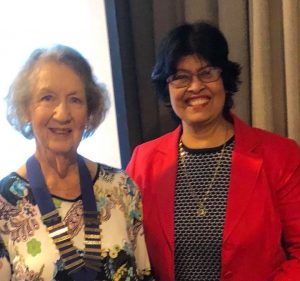
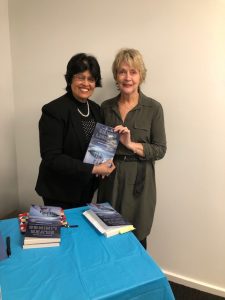
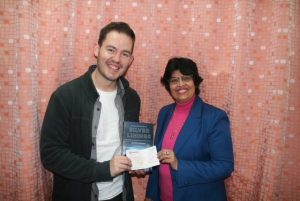
Member Dr Mrin Nayagam has recently become an author and published her first book. She spoke to Vicdoc about her medical journey.
Why did you want to become a doctor?
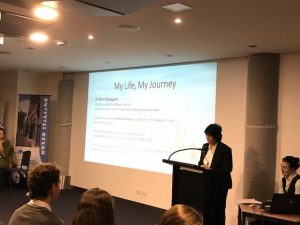
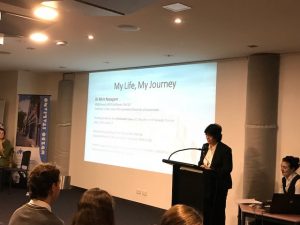
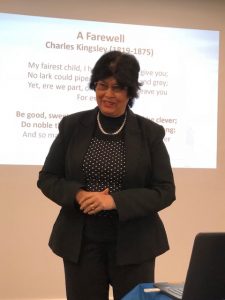
This was the poem I read out at the start of the author presentation, at the launch of my book-“Silver Linings- True Stories of resilience from a General Practice”:
Emily Dickinson 1830-1886 Part One: Life
VI
If I can stop one heart from breaking I shall not live in vain
If I can ease one Life the Aching, Or cool one Pain
Or help one fainting Robin Unto his nest again,
I shall not live in Vain.
I always wanted to be a doctor.
Perhaps it was just me, or perhaps it was the encouragement from my parents. Who can tell? This desire to be a doctor was
always with me from a very young age. My father’s words, “Tether your wagon to a star…” and my mother’s, “Do noble things, not dream them all day long…” were my inspirations when growing up.
I recall year after year at school I documented my ambition of becoming a doctor. At times I wrote (in my ignorance) that I wanted to be a doctor or a surgeon one day. As I grew older, I fine-tuned this to be a children’s doctor. In 1980 when I passed the MRCP (UK) Paediatrics, my wishes were realised.
Where did you do your medical training?
The road to medical school back in Sri Lanka is tough. 150,000 students vie for 150 places in the premier medical school located in Colombo. The life of a medical student was fun, but exams were hard because the standards were very high. Unlike the present day, we had real anatomy lessons, and we dissected human cadavers, with six students assigned to each body. Cunningham’s Textbook of Anatomy was our prayer book and Gray’s Anatomy was our Bible.
My initial post-graduate training was in Colombo. I interned in paediatrics
in the professor’s unit and had a great rotation in general surgery as well. After this, my extended residency was in a district hospital close to Colombo where I worked in the fields of medicine, surgery, obstetrics, emergency and paediatrics over a two-year period. That invaluable experience still gives me confidence in my work today.
Having passed the MRCP (Part I) in Colombo, my husband Prakash and I left for England in 1980 to sit Part II, which is only held in the UK. This comprised
of six short cases and a long case, followed by a gruelling interview with three specialists from the chosen field. Times were hard. While working at the Great Ormond Street Group, I had to quit as child care was unaffordable. We moved to Brighton and Hove, and I stayed home to look after our two-year-old son, keeping my hand in with occasional weekend locums at the nearby Royal Alexandra Children’s Hospital.
So, imagine my utter joy when six of us sat for the MRCP Paediatrics from the Brighton Area Health Authority (UK) and I was the only one who passed!
It was unbelievable! The next day the senior dermatologist in the area offered me a post which was created for me under a scheme where women doctors with family commitments unable to work full-time (who also had post-grad qualifications) were entitled to jobs created for them to suit their individual needs. I chose my hours – it was the thin edge of the wedge and in time I was the clinical assistant (the equivalent of a staff specialist here) in dermatology. I practiced dermatology and paediatrics at the Royal Alexandra Hospital.
What brought you to Australia?
We spent 10 years in England and they were happy times, however consultancies were thin on the ground, especially physician/geriatrician posts (for my husband). Further, the climate did not suit my health – I had severe Raynaud’s for nine months of the year. So, when an opportunity arose to migrate to Australia, we decided we were young enough and moved continents, once more, in 1990 – the same year Collingwood won the premiership! I have been a one-eyed Magpie ever since!
Moving to Australia presented its own obstacles when doors for paediatrician training in my local area did not open. Rather than fragmenting the family, I decided to do general practice with a special interest in paediatrics.
For a long-time you have collated a list of ‘interesting patients’ you have seen. What prompted you to do this and how did it lead to your new book?
Over the years I have surprised myself when, time and again, a gut feeling about a diagnosis came true and the patients were saved many months of investigations and the cost of many specialist visits.
As I had a part-time teaching appointment at the Department of General Practice at Monash University, a practical knowledge of real-life patients came in handy during teaching sessions.
Whenever I used the deidentified patient’s notes to enhance the students’ knowledge of a subject I kept a note of the patient’s details in a list. I like keeping lists – it’s a relic from studying for exams. From these small beginnings, my list of patients with an interesting or even rare diagnosis grew.
I transferred the names on the piece of paper to a book classifying the names under specific conditions or simply as interesting cases.
Patients are intrigued and at times amused when I pull my notebook out and include their names in one of the lists. As I made more exotic diagnoses by following clinical principles rather than referring to specialists, my list grew. I referred the patients to specialist for fine- tuning. Most specialists were happy to send them back for continued follow-up and management as they knew I would re-refer, if I needed further guidance. One of the first such cases was myasthenia gravis I diagnosed in a 30-year-old female at her first presentation. I referred her to Prof Edward Byrne for further management and it was this interaction early in my life in general practice that led me to appreciate the rewards of investigations.
One day a fourth-year medical student sitting with me at the practice leafed through my book of lists and suggested I could write a book. The seed was sown! I always wanted to be a published author, this being a consequence of extensive reading during my formative years, so I had given the subject much thought.
How did you select your stories for inclusion in the book and what level of cooperation did it require from your patients?
Writing a narrative about patients and their journeys when faced with a devastating diagnosis or a traumatic event (either physical or emotional) seemed an acceptable start.
The main hurdle, however, was that I was unwilling to write about my patients
for personal financial gain, so I decided diverting the profits to charity would be a good idea.
I first asked my solicitor to draw up a legal agreement incorporating all the caveats I could think of to get informed consent from the parents (if the patient was a child), or from the patients themselves, if adults.
Once this was done and all issues were covered I wrote to 50 patients for their consent to take part in the project. I explained that all the profits would go to charity. To my delight, all but one agreed. The patient who did not was moving away from our area.
Many stories were written during my vacations and on aeroplanes when the rest of the passengers were asleep, or at my home, in the still of the night. Once read, edited and re-edited several times over, the final version was presented to the patient to read and give signed consent for publication.
All of the proceeds from your book are going to your charity, the Silver Linings Charitable Trust…Can you tell us a little bit about this?
Since 2006, under the auspices of the Village Clinic and run with
the support of all the doctors and staff, a collection of non-perishable food for distribution to the needy and financially disadvantaged of the Frankston area takes place at
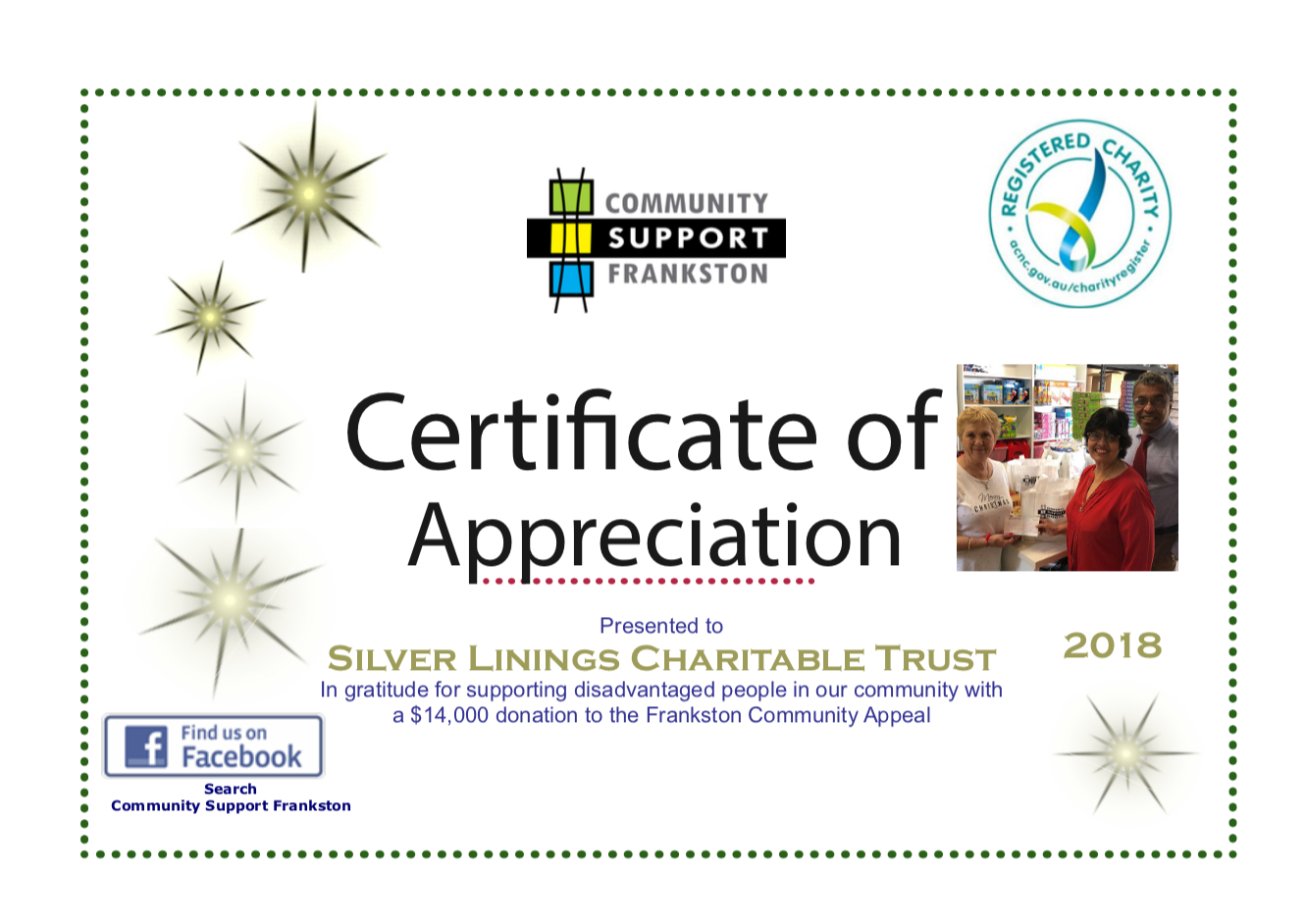
the end of each year. This is done in collaboration with Frankston Community Support.
The food collected at the clinic – donated by patients, specialists, staff of the clinic, pharmaceutical reps/ companies, pathology and radiology providers as well as friends and family of the Village Clinic – is packed by the staff and myself into 50-litre plastic tubs, hence the name – 15 Tubs Appeal – as the original target was to fill 15 such tubs.
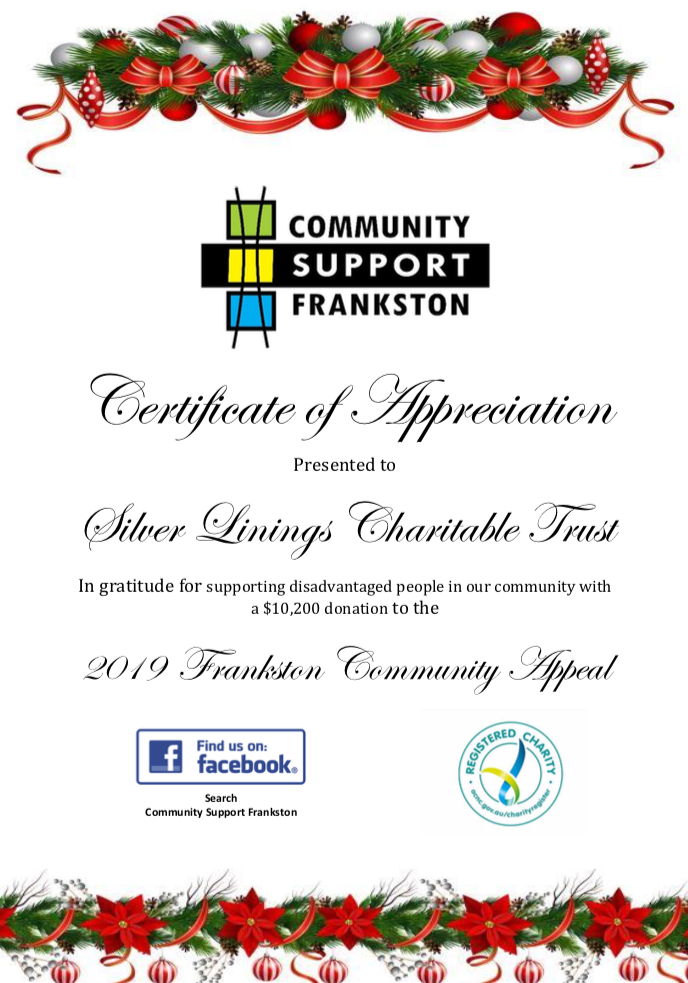
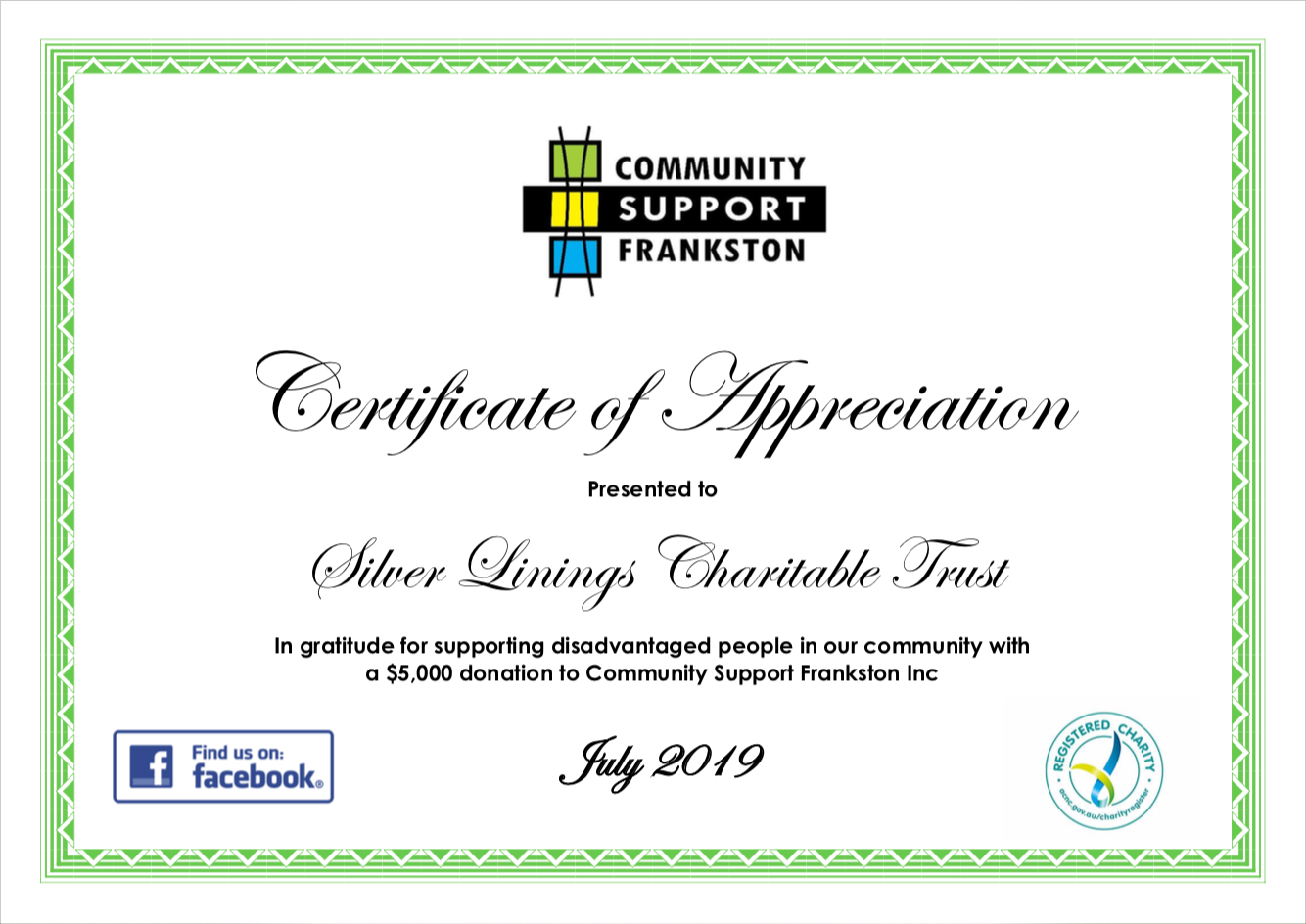
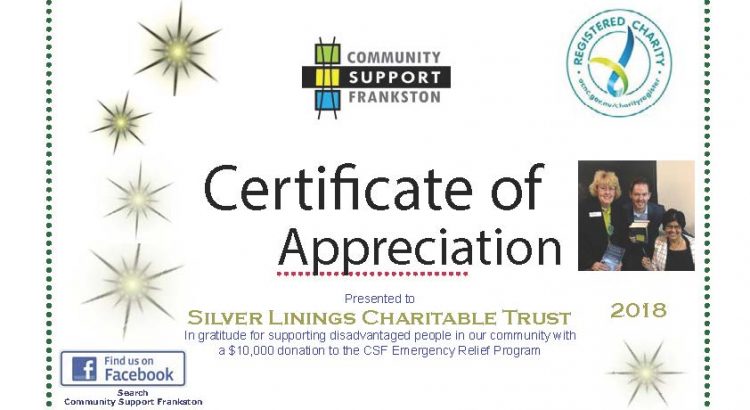
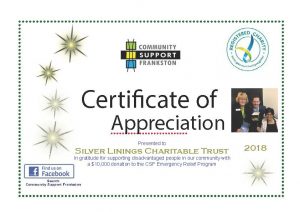
In 2016 we filled 102 tubs, which was 5,200 litres of food that found its way to feed the needy at Christmas time. I felt it was important to sustain this through the year, as often the larder of Frankston Community Support is empty, so I established a charity – the Silver Linings Charitable Trust – aimed at supporting the financially disadvantaged throughout the year.
There is no administration fee, and the trust has been accorded a charity status by the ACNC and also has a DGR status from the ATO. All profits from the sales of my book will be directed to the trust. All donations made to the trust will be acknowledged with a tax receipt, and books may be bought in bulk for business purposes, for which a tax invoice can be issued.
To buy a book or make a donation, please visit www. silverliningscharitabletrust.com.au
VICDOC_FEB-MAR18_MrinNayagam